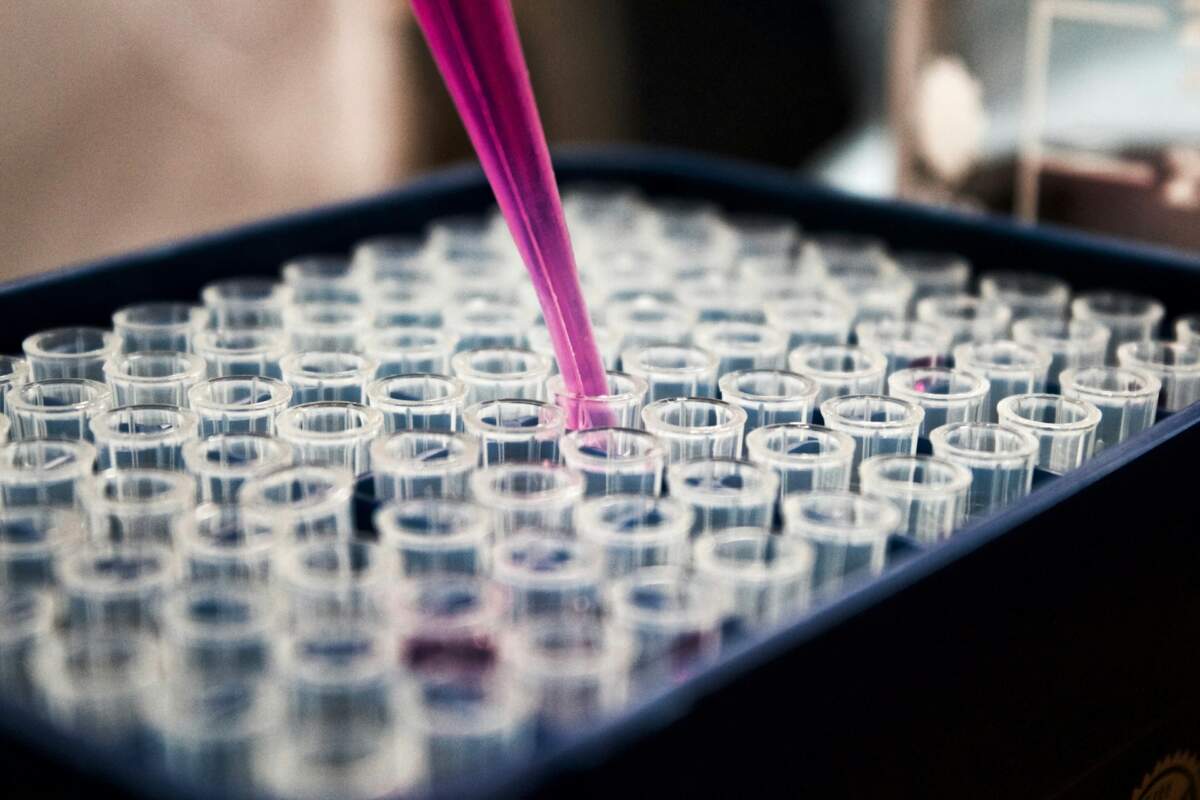

A single microliter can be the difference between a valid experiment and a failed one. Yet in labs across every industry, pipettes are often the most overlooked instrument on the bench.
They’re used dozens of times a day, passed between technicians, and rarely questioned until a result doesn’t add up. That’s a problem, because even a tiny deviation in dispensed volume can cascade into flawed data, failed audits, or compromised patient samples.
Pipette accuracy isn’t a nice-to-have; it’s a foundational requirement for any lab that depends on precise, repeatable measurements.
This post breaks down why regular calibration matters, what can go wrong without it, and how to build a maintenance program that keeps your instruments—and your results—trustworthy.
Why Does Pipette Accuracy Matter So Much?
Pipettes are precision instruments, not simple tools. Mechanical wear, temperature fluctuations, and improper handling can all shift how much liquid a pipette actually delivers compared to what the dial says.
In research settings, this translates directly into reproducibility issues. In clinical and diagnostic labs, it can mean incorrect dilutions or reagent concentrations that skew test results.
In manufacturing and quality control environments, it can lead to batch failures or regulatory non-compliance.
Consider the ripple effect of a single miscalibrated pipette:
- Skewed experimental data that leads researchers down the wrong path
- Failed proficiency tests that trigger costly investigations
- Non-compliance findings during ISO or regulatory audits
- Wasted reagents and samples from repeated, unreliable runs
The smaller the volume being measured, the larger the relative impact of an error. A 2% deviation on a 1000 µL pipette is a rounding error; that same 2% on a 2 µL pipette can invalidate an entire assay.
What Happens When Lab Instrument Maintenance Is Neglected?
Pipettes don’t fail dramatically. They drift quietly, which is what makes neglect so risky. A pipette can look and feel perfectly normal while delivering volumes that are consistently off.
Common signs of a pipette in need of attention include:
- Inconsistent results between replicate measurements
- Difficulty achieving a smooth plunger action
- Visible wear on seals, O-rings, or the piston
- Leaking or dripping after aspiration
- Unusual resistance when drawing up liquid
Without a structured lab instrument maintenance schedule, these issues go unnoticed until they surface in your data.
Preventive maintenance—internal and external cleaning, seal and O-ring replacement, piston polishing, and lubrication—should happen as part of every calibration cycle, not just when a pipette visibly breaks down.
How Does Volume Verification Confirm Pipette Performance?
Volume verification is the process of testing a pipette against known reference standards to confirm it dispenses the exact amount it’s set to.
This is typically done using a precision analytical balance, controlled environmental conditions, and multiple test points across the pipette’s range.
A thorough verification process should include:
- As Found testing — measuring performance before any adjustments, so you know the baseline condition
- Adjustment, if needed, to bring the pipette back within tolerance
- As Left testing — confirming the pipette performs accurately after adjustment
- Documentation of both results, so you have a full record of the instrument’s condition over time
This “As Found, As Left” approach matters because it tells you not just whether a pipette is currently accurate, but how far it had drifted before correction.
That data is valuable for identifying pipettes that fail frequently and may need replacement rather than repeated repair.
What Should You Look for in a Pipette Calibration Service?
Not all calibration providers offer the same level of rigor. When evaluating a pipette calibration service, look for accreditation and technical capability that matches your industry’s requirements.
Key credentials and capabilities to check for include:
- ISO/IEC 17025 accreditation, which verifies the lab’s technical competence and quality management system
- ANSI/NCSL Z540-1 compliance, often required for regulated industries
- ISO 8655 compliant testing, the specific standard for piston-operated volumetric instruments like pipettes
- Pipette-specific balances and vibration-reducing equipment, which are essential for achieving the low uncertainties needed at microliter volumes
- Fast turnaround options, since labs can’t always afford to be without critical instruments for extended periods
Accredited labs also participate in proficiency testing, comparing their results against industry benchmarks to confirm their own measurement accuracy stays within acceptable limits.
Should You Choose Mail-In or On-Site Pipette Calibration?
The right calibration model depends on your lab’s workflow, pipette volume, and how much downtime you can tolerate.
Mail-in calibration works well for labs that:
- Have a smaller fleet of pipettes or backup instruments available
- Can plan calibration cycles in advance
- Want access to a fully equipped, environmentally controlled laboratory
On-site calibration is the better fit for labs that:
- Rely on continuous pipette availability and can’t send instruments off-site
- Manage a large volume of pipettes across multiple departments
- Need customizable testing plans performed in their own environment
On-site services should still deliver the same standard of accuracy as an in-house lab, using comparable pipette-specific balances and vibration-reducing equipment. The convenience of staying on-site shouldn’t come at the cost of precision.
How Often Should Pipettes Be Calibrated and Serviced?
Calibration frequency depends on usage intensity, regulatory requirements, and the criticality of the work being performed. That said, a few general principles apply across most labs:
- High-use pipettes in clinical or high-throughput settings often warrant quarterly or semi-annual calibration
- Lower-use or backup pipettes may only need annual calibration
- Any pipette involved in an out-of-tolerance event should be recalibrated immediately, not on the standard schedule
- New or recently repaired pipettes should always be verified before returning to active use
Beyond scheduled calibration, proper technique plays a major role in maintaining accuracy between service intervals.
Training programs covering pipetting technique, decontamination guidelines, and common failure symptoms help technicians catch problems early, before they affect results.
Comprehensive documentation—electronic calibration reports, service history, and out-of-tolerance notifications—also makes it far easier to track trends across your pipette fleet and flag instruments that need attention sooner than expected.
Building Accuracy Into Your Lab’s Daily Routine
Pipette calibration isn’t a box to check once a year and forget about. It’s an ongoing commitment that protects the integrity of every experiment, test, and batch that depends on precise liquid handling.
Labs that treat calibration as a routine part of instrument care, rather than a reactive fix, consistently produce more reliable data and pass audits with fewer surprises.
Start by auditing your current pipette fleet: When was each instrument last calibrated? Are maintenance records complete and accessible? Are technicians trained on proper technique?
Answering these questions honestly is the first step toward a lab that can trust its numbers, one microliter at a time.